The ai in healthcare industry is no longer a future concept. It is becoming a practical foundation for hospitals, clinics, laboratories, telehealth platforms and healthcare startups that want faster decisions, better patient experiences and more efficient operations.
Healthcare organizations deal with large volumes of patient records, appointment schedules, insurance data, diagnostic reports, staff workflows and compliance requirements. Manual systems often slow down care delivery and increase operational pressure. This is where ai healthcare solutions create real business and clinical value.
From healthcare automation tools to ai patient management systems, artificial intelligence helps providers reduce repetitive work, improve patient communication, support clinical decisions and use data more intelligently. Major cloud providers also highlight AI’s role in healthcare data management, interoperability, clinical insights and operational efficiency. Google Cloud, for example, describes healthcare AI use cases ranging from patient questions to data integration and AI-powered care workflows.
For companies like Techticks, this creates a strong opportunity to support healthcare businesses with custom AI software, web applications, mobile apps and scalable integrations.
Why AI in Healthcare Industry Matters in 2026
The healthcare sector is under pressure to deliver faster, safer and more personalized care. Patients expect digital access, real-time updates, online appointment booking, automated reminders and secure health records. At the same time, hospitals need better systems for staff productivity, resource planning, reporting and patient flow.
This is why digital healthcare transformation is becoming essential.
AI helps healthcare organizations:
- Automate repetitive administrative tasks
- Analyze patient and operational data
- Support medical diagnosis workflows
- Improve patient engagement
- Predict risks and resource demand
- Reduce human error in manual processes
- Build smarter hospital management systems
Microsoft also emphasizes healthcare AI for patient engagement, clinical insights, care team collaboration and operational improvement.
For healthcare providers, AI is not just about advanced technology. It is about creating smart healthcare systems that improve service quality while reducing operational bottlenecks.
AI Healthcare Solutions for Better Hospital Operations
One of the biggest benefits of ai healthcare solutions is operational efficiency. Hospitals and clinics manage complex workflows every day. These include appointment scheduling, patient registration, billing, insurance verification, report management, inventory control, staff allocation and follow-ups.
AI can improve these areas through automation and prediction.
Healthcare Automation Tools for Administrative Work
Healthcare automation tools help reduce time spent on repetitive tasks. For example, an AI-enabled system can automatically classify patient requests, schedule appointments, send reminders, update records and route cases to the right department.
This reduces the workload on front-desk teams and allows healthcare staff to focus more on patient care.
Common automation use cases include:
- Appointment booking automation
- Patient reminder systems
- Insurance and billing workflow automation
- Medical report sorting
- Chatbot-based patient support
- Follow-up notification systems
- Prescription refill reminders
A custom healthcare platform developed through Techticks’ AI Development & Integration service can connect AI models with existing hospital workflows, CRMs, patient portals or internal dashboards.
AI Development & Integration:
AI Patient Management Systems for Personalized Care
Modern patients expect smooth digital experiences. They want to book appointments online, receive updates, access medical reports, communicate with providers and track their care journey.
This is where ai patient management systems help.
AI can analyze patient history, appointment behavior, risk factors and communication patterns to improve patient care delivery. For example, a system can identify patients who often miss appointments and send personalized reminders. It can also help prioritize high-risk patients for follow-up.
Benefits of AI Patient Management Systems
AI-powered patient platforms can support:
- Patient onboarding
- Appointment scheduling
- Follow-up automation
- Chronic disease monitoring
- Care plan reminders
- Patient segmentation
- Digital communication
- Risk alerts
These systems are especially useful for clinics, hospitals, telemedicine platforms, diagnostic labs and home healthcare providers.
When combined with web and mobile applications, healthcare organizations can give patients access to secure portals, mobile dashboards and self-service tools.
Web App Development:
AI for Medical Diagnosis and Clinical Decision Support
One of the most discussed areas of artificial intelligence in hospitals is diagnosis support. AI can help analyze medical images, lab results, symptoms, patient history and clinical notes.
The purpose is not to replace doctors. The goal is to support medical professionals with faster insights and better decision-making.
How AI for Medical Diagnosis Works
AI for medical diagnosis often uses machine learning models trained on structured and unstructured healthcare data. These models can identify patterns that may be difficult to detect manually.
Examples include:
- Detecting abnormalities in medical images
- Supporting radiology workflows
- Flagging unusual lab results
- Predicting disease risk
- Assisting with clinical triage
- Summarizing patient history
- Identifying early warning signs
AWS notes that AI and machine learning are being applied in healthcare for treatment prioritization, outcome prediction, provider workflows and revenue cycle operations.
However, healthcare AI must be built carefully. Accuracy, explainability, privacy, clinical validation and compliance are critical. AI should support healthcare professionals, not make unsupported final medical decisions.
Healthcare Data Analytics Tools for Smarter Decisions
Healthcare organizations generate huge amounts of data. This includes electronic health records, lab reports, billing data, appointment history, pharmacy data, device data and patient feedback.
Without the right systems, this data remains scattered.
Healthcare data analytics tools help convert raw healthcare information into useful insights. These insights can improve both clinical and business decisions.
Predictive Healthcare Analytics
Predictive healthcare analytics can help hospitals forecast:
- Patient admission trends
- Bed occupancy
- Staff demand
- High-risk patient groups
- Readmission probability
- Treatment delays
- Inventory usage
- Revenue cycle issues
For example, a hospital can use predictive analytics to identify which departments may experience higher patient volume next week. This helps management allocate staff and resources more effectively.
Google Cloud also highlights AI and data solutions for healthcare transformation, operational efficiency, employee productivity and patient care experiences.
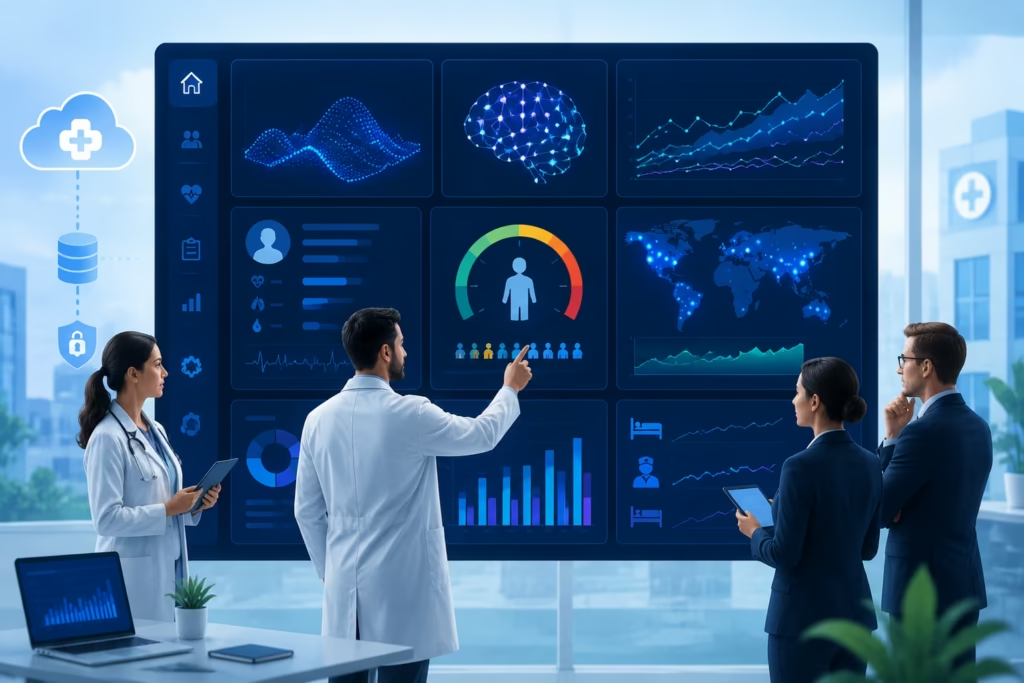
Hospital Management Software AI: From Manual Systems to Smart Operations
Traditional hospital management software often stores information but does not actively improve workflows. Hospital management software AI changes this by adding automation, prediction and intelligent recommendations.
Features of AI-Powered Healthcare Software
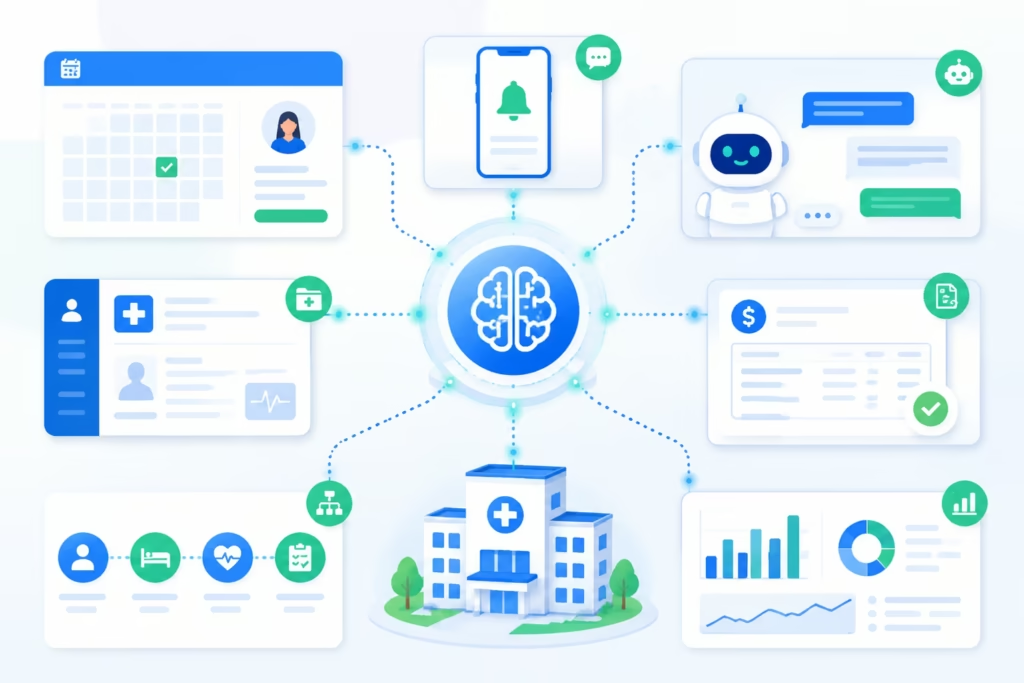
A strong ai-powered healthcare software system may include:
- Smart appointment scheduling
- Automated patient reminders
- AI chatbot support
- Patient risk scoring
- Real-time analytics dashboard
- Billing workflow automation
- Inventory forecasting
- Medical record summarization
- Staff workload prediction
- Secure role-based access
This type of software is valuable for hospitals, private clinics, diagnostic centers, dental clinics, physiotherapy centers and telehealth startups.
For Techticks, this topic aligns naturally with AI integration, custom web app development, mobile app development, QA testing and DevOps deployment services.
Machine Learning in Healthcare: Practical Use Cases
Machine learning in healthcare allows systems to learn from historical data and improve predictions over time. It is useful when healthcare organizations have enough clean, structured and relevant data.
Common Machine Learning Healthcare Use Cases
Healthcare businesses can use machine learning for:
1. Patient Risk Prediction
Machine learning models can help identify patients at risk of readmission, chronic disease complications, or missed appointments.
2. Medical Image Analysis
AI can support radiologists and specialists by detecting possible abnormalities in X-rays, MRIs, CT scans and ultrasound images.
3. Revenue Cycle Optimization
AI can identify billing errors, claim rejection patterns, and delayed payments.
4. Patient Communication
AI chatbots and virtual assistants can answer common questions, guide patients and reduce support workload.
5. Inventory and Resource Planning
Hospitals can predict demand for medicines, supplies, beds and staff.
Traditional Healthcare Systems vs AI-Powered Healthcare Software
| Feature | Traditional Healthcare System | AI-Powered Healthcare Software |
| Appointment Scheduling | Manual or rule-based | Smart scheduling with reminders and predictions |
| Patient Support | Phone or front desk dependent | AI chatbot and automated support |
| Medical Records | Stored digitally but manually reviewed | Summarized and analyzed with AI |
| Diagnosis Support | Doctor-only review | AI-assisted insights for clinical support |
| Data Analytics | Basic reports | Predictive healthcare analytics |
| Staff Planning | Manual planning | Demand-based forecasting |
| Billing | Manual claim checks | AI-assisted error detection |
| Patient Follow-up | Manual calling | Automated patient engagement |
| Operational Visibility | Limited dashboards | Real-time healthcare data analytics tools |
| Scalability | Slower to expand | Cloud-based and integration-ready |
Healthcare Technology Trends in 2026
The most important healthcare technology trends in 2026 are focused on automation, AI integration, cloud systems, secure data exchange and personalized care.
Key trends include:
- AI-powered patient portals
- Healthcare chatbots
- Predictive analytics dashboards
- Remote patient monitoring
- Cloud-based hospital systems
- AI-assisted diagnosis tools
- Automated medical documentation
- Smart appointment systems
- Secure healthcare APIs
- Mobile-first patient engagement
Google Cloud’s Healthcare API documentation describes managed healthcare data storage and access as a bridge between existing care systems and applications hosted on Google Cloud.
This shows why modern healthcare software must be integration-ready. A healthcare application should not work in isolation. It should connect with labs, pharmacies, billing platforms, patient portals and analytics dashboards.
AI Integration in Healthcare: What Businesses Should Consider
Successful ai integration in healthcare requires more than adding a chatbot or dashboard. Healthcare businesses need a clear strategy.
Important AI Integration Steps
1. Identify the Business Problem
Start with a clear use case. For example, reduce missed appointments, automate patient support, improve diagnosis workflow, or predict patient demand.
2. Audit Available Data
AI depends on quality data. Healthcare organizations need clean, secure and structured datasets.
3. Choose the Right AI Model
Not every use case needs complex AI. Some workflows can be improved with automation, rules, or simple machine learning models.
4. Build Secure Integrations
Healthcare data is sensitive. Systems need strong access control, encryption, logging and compliance-focused architecture.
5. Test Before Deployment
Quality assurance is critical in healthcare software. AI outputs must be tested for reliability, bias and workflow safety.
6. Monitor Performance
AI systems should be continuously monitored after deployment to ensure accuracy, speed and safety.
How Techticks Can Support Healthcare AI Projects
Techticks can position itself as a healthcare technology partner for businesses that need custom AI, web apps, mobile apps, DevOps, QA and SEO-backed digital growth.
For healthcare companies, Techticks can help build:
- AI healthcare dashboards
- Patient management systems
- Hospital management software AI
- Appointment booking apps
- Telemedicine platforms
- AI chatbot systems
- Healthcare data analytics tools
- Cloud-based healthcare web apps
- Mobile apps for patient engagement
- AI-powered healthcare software integrations
This directly matches Techticks’ current service structure, including AI Development & Integration, Web App Development, Mobile App Development, DevOps, QA and SEO.
FAQs (Frequently Asked Questions)
AI in Healthcare Industry
What is AI in healthcare industry?
AI in healthcare industry means using artificial intelligence, machine learning, automation and data analytics to improve hospital operations, patient care, diagnosis support and healthcare decision-making.
How are AI healthcare solutions used in hospitals?
AI healthcare solutions are used for appointment scheduling, patient management, medical diagnosis support, billing automation, medical record analysis, staff planning and predictive healthcare analytics.
Can AI replace doctors?
No. AI should support doctors, not replace them. AI can analyze data, detect patterns and provide decision support, but final medical decisions should remain with qualified healthcare professionals.
What are healthcare automation tools?
Healthcare automation tools are software systems that automate repetitive healthcare tasks such as appointment reminders, patient registration, billing workflows, follow-ups and support requests.
What is AI-powered healthcare software?
AI-powered healthcare software uses artificial intelligence to automate workflows, analyze patient data, support clinical decisions and improve healthcare operations.
How does machine learning in healthcare work?
Machine learning in healthcare uses historical data to identify patterns and make predictions. It can support risk scoring, diagnosis assistance, resource planning and patient behavior analysis.
Why is predictive healthcare analytics important?
Predictive healthcare analytics helps hospitals forecast patient demand, identify high-risk patients, reduce readmissions, optimize staffing and improve operational planning.
What is the role of AI patient management systems?
AI patient management systems help healthcare providers manage appointments, follow-ups, reminders, patient communication, risk alerts and personalized care journeys.
Is AI integration in healthcare secure?
AI integration can be secure if it includes encryption, access controls, audit logs, compliance-focused architecture and proper testing. Security must be planned from the beginning.
How can Techticks help healthcare companies?
Techticks can help healthcare companies build custom AI healthcare solutions, web apps, mobile apps, automation tools, analytics dashboards and scalable healthcare software systems.
Ready to build a digital asset that scales with your ambition?
Ready to grow your business? Schedule a meeting with Techticks today and discuss your project with our experts.
If you have any questions regarding “ai in healthcare industry“, feel free to contact us. For inquiries, call us at: +1 (983) 212-4713.
Disclaimer: The above information is subject to change and represents the views of the author. It is shared for educational purposes only. Readers are advised to use their own judgment and seek specific professional advice before making any decisions. TechTicks is not liable for any actions taken by readers based on the information shared in this article. You may consult with us before using this information for any purpose.