
Logistics and supply chain operations are becoming faster, more connected, and more data-driven than ever before. Businesses no longer compete only on product quality or pricing. They also compete on delivery speed, shipment visibility, warehouse accuracy, route efficiency, and customer communication. This is why modern logistics management software has become a critical investment for logistics companies, retailers, distributors, manufacturers, eCommerce brands, and transportation providers. The old way of managing shipments through spreadsheets, phone calls, manual paperwork, and disconnected systems is no longer enough for businesses that want to scale.
Today, companies are using supply chain automation tools, fleet tracking systems, warehouse management software, real time shipment tracking, and cloud based logistics platforms to improve operational control. Artificial intelligence is also playing a major role. With ai in logistics industry workflows, companies can forecast demand, optimize routes, automate inventory decisions, identify risks, and improve delivery planning. For logistics businesses in Denver, CO and across the USA, technology is no longer optional. It is becoming the foundation of efficiency, visibility, and long-term growth.
What is Logistics Management Software?
Logistics management software is a digital system that helps businesses manage transportation, deliveries, inventory, warehouse operations, fleet activity, order tracking, route planning, and reporting from one centralized platform.
Instead of relying on separate tools for dispatching, inventory, shipment updates, driver communication, and customer support, logistics software connects these processes into one workflow. This gives managers better visibility and helps teams make faster decisions.
A strong logistics software platform may include:
- Order management
- Shipment tracking
- Fleet tracking systems
- Driver assignment
- Route optimization
- Warehouse management software
- Inventory automation
- Delivery status updates
- Customer notifications
- Reporting dashboards
- Mobile apps for drivers and customers
- Cloud-based admin panels
For companies managing high shipment volume, multiple warehouses, or distributed delivery teams, this type of platform can reduce delays, improve accuracy, and create a smoother customer experience.
Why Logistics Technology Matters in 2026
Customer expectations have changed. Buyers want real-time updates, faster delivery, accurate ETAs, easy returns, and transparent communication. At the same time, businesses face pressure from rising fuel costs, labor shortages, inventory challenges, route delays, and supply chain disruptions.
Technology helps solve these challenges by giving companies better control over every stage of the logistics journey.
With smart logistics solutions, a business can track shipments, assign drivers, monitor warehouse stock, predict delays, and communicate updates automatically. This reduces manual effort and improves operational reliability.
For example, if a delivery vehicle is delayed because of traffic, the system can update the ETA, notify the customer, alert the dispatcher, and suggest an alternative route. Without technology, this process may require multiple phone calls and manual coordination.
This is the real value of digital logistics transformation: fewer blind spots, faster decisions, and better service quality.
How Supply Chain Automation Tools Improve Efficiency
Supply chain automation tools help logistics companies reduce repetitive manual tasks. These tools can automate order processing, stock updates, dispatch assignments, delivery notifications, invoice generation, warehouse alerts, and reporting.
Manual supply chain processes often create errors. A wrong stock count can delay fulfillment. A missed delivery update can frustrate customers. A late driver assignment can affect the entire route. Automation reduces these issues by creating consistent digital workflows.
Common areas where automation improves supply chain efficiency include:
| Process | Manual Workflow | Automated Workflow |
| Order Processing | Staff enters order details manually | Orders are captured and assigned automatically |
| Inventory Updates | Stock is checked by hand | Inventory updates in real time |
| Dispatching | Manager calls drivers manually | System assigns drivers based on route and availability |
| Delivery Updates | Customer calls support for status | Customer receives automated tracking updates |
| Reporting | Weekly reports created manually | Live dashboards show current performance |
| Reordering | Staff checks low stock manually | System sends automated replenishment alerts |
Automation does not remove the need for human decision-making. Instead, it gives teams more time to focus on exceptions, customer service, and strategic planning.
AI in Logistics Industry: Smarter Decisions with Data
AI in logistics industry operations is one of the biggest drivers of supply chain improvement. Logistics companies generate large amounts of data from shipments, warehouses, vehicles, routes, customers, fuel usage, delivery times, and inventory movement. AI helps turn that data into useful insights.
AI can help logistics businesses answer important questions:
- Which delivery routes are most efficient?
- Which vehicles need maintenance soon?
- Which products are likely to go out of stock?
- Which warehouse zones are slowing fulfillment?
- Which customers are likely to need repeat deliveries?
- Which shipments are at risk of delay?
This is where ai supply chain management becomes valuable. AI can support demand forecasting, route planning, inventory optimization, warehouse productivity, risk detection, and predictive maintenance. For example, AI can analyze historical shipment data and identify patterns that humans may miss. If certain routes often face delays at specific times, the system can recommend better planning. If inventory demand increases during a seasonal period, the system can suggest earlier restocking. Techticks’ AI Development & Integration service can support logistics companies that want to add AI-powered automation, predictive analytics, smart dashboards, and intelligent workflow tools into their existing platforms.
Fleet Tracking Systems Improve Transportation Visibility
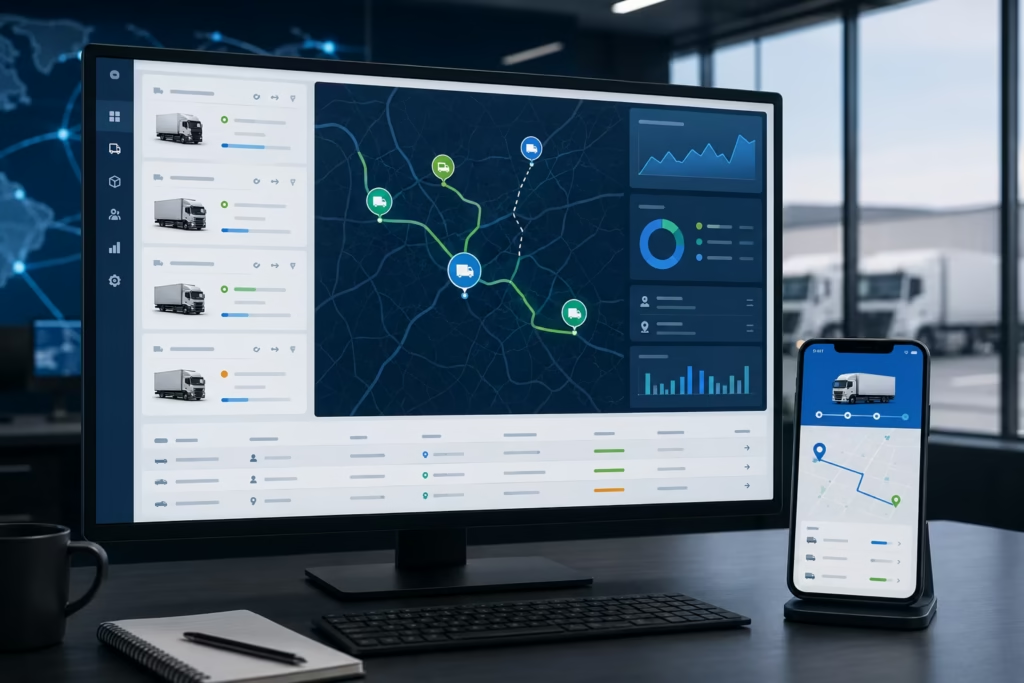
For logistics companies, fleet visibility is essential. Without accurate vehicle tracking, managers may not know where drivers are, whether deliveries are on time, or how efficiently vehicles are being used. Fleet tracking systems solve this problem by giving businesses real-time information about vehicle locations, driver activity, mileage, routes, fuel usage, and maintenance needs.
Fleet tracking can help logistics businesses:
- Monitor vehicle locations in real time
- Improve route planning
- Reduce unauthorized vehicle use
- Track driver performance
- Improve delivery ETAs
- Reduce fuel waste
- Schedule preventive maintenance
- Improve safety and accountability
When fleet tracking is connected with delivery tracking mobile apps, both internal teams and customers get better visibility. Dispatchers can manage drivers more effectively, while customers can receive live delivery status updates. This improves trust, reduces support calls, and helps logistics companies deliver a better customer experience.
Real Time Shipment Tracking Builds Customer Trust
Modern customers expect to know where their shipment is at every stage. They do not want vague updates like “out for delivery” without an estimated arrival time. They want accurate, real-time information. Real time shipment tracking gives customers, dispatchers, warehouse teams, and managers access to live shipment status. It can show when an order is packed, picked up, in transit, delayed, delivered, or returned. This is especially important for eCommerce, healthcare logistics, food delivery, B2B distribution, and high-value shipments. Real-time tracking reduces uncertainty and improves communication.
A good tracking system can include:
- Live shipment location
- Estimated delivery time
- Driver status
- Delay alerts
- Proof of delivery
- Customer notifications
- Delivery history
- Exception reporting
For logistics companies, real-time tracking also improves internal performance. Managers can identify bottlenecks, measure delivery accuracy, and improve planning.
Warehouse Management Software Improves Inventory Accuracy
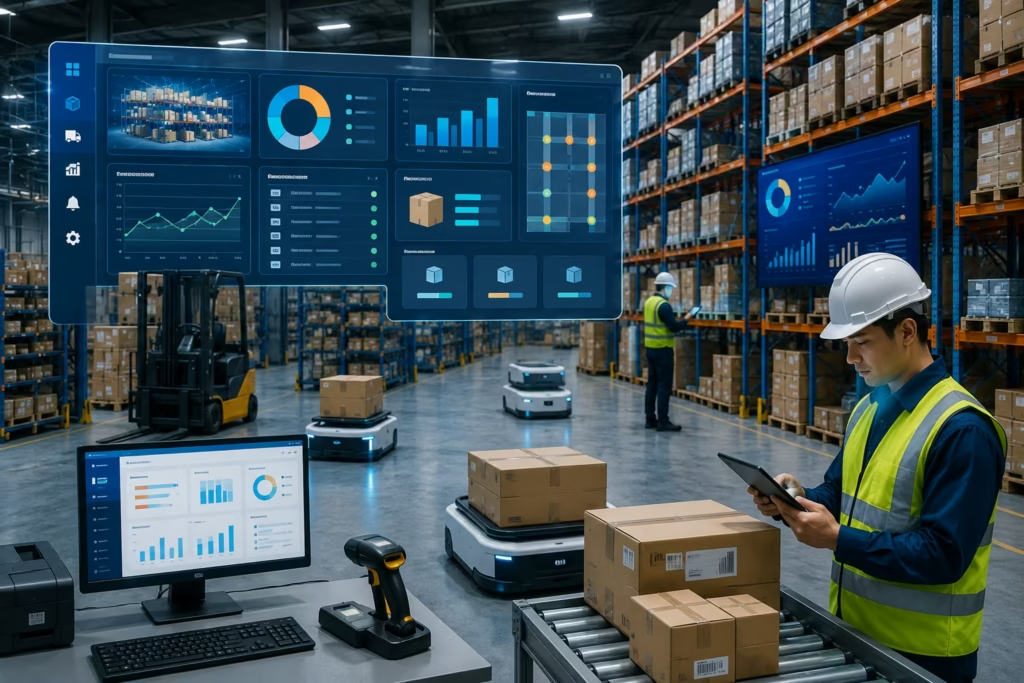
Warehouses are the operational center of many supply chains. If warehouse operations are slow or inaccurate, the entire logistics process suffers. Wrong inventory counts, misplaced products, delayed picking, and poor stock visibility can lead to late deliveries and unhappy customers. Warehouse management software helps businesses manage stock movement, order picking, packing, receiving, storage, barcode scanning, returns, and inventory reporting. When combined with automated inventory management, warehouse software can update stock levels in real time, trigger reorder alerts, reduce overstocking, and prevent stockouts. This is especially useful for businesses that manage multiple warehouses or high-volume SKUs. Instead of waiting for manual stock checks, managers can see accurate inventory data instantly. Warehouse management software can also connect with transportation management systems, customer portals, and accounting platforms. This creates a complete digital workflow from inventory to delivery.
Transportation Management Systems Streamline Delivery Operations
Transportation management systems help companies plan, execute, and optimize the movement of goods. They are especially useful for businesses managing multiple carriers, delivery zones, routes, drivers, and shipment types.
A transportation management system can support:
- Route planning
- Carrier selection
- Load optimization
- Delivery scheduling
- Freight cost management
- Shipment tracking
- Driver communication
- Proof of delivery
- Performance analytics
For logistics companies, this means fewer delays, better resource usage, and improved delivery performance. A transportation management system can also work with logistics optimization tools to reduce unnecessary mileage, improve vehicle utilization, and lower delivery costs.
Cloud Based Logistics Platforms Enable Scalability
As logistics businesses grow, they need systems that can handle more users, more vehicles, more shipments, more warehouses, and more data. This is why many companies are moving toward cloud based logistics platforms. Cloud-based systems allow teams to access logistics data from different locations, devices, and departments. Managers can view dashboards from the office, warehouse staff can update inventory from scanners, drivers can use mobile apps, and customers can track shipments online.
Cloud platforms also make it easier to integrate AI, analytics, APIs, mobile apps, and third-party tools. AWS notes that cloud-based supply chain systems can improve visibility, reduce risk, support faster decisions, and use technologies such as data lakes, machine learning, and generative AI for supply chain operations. For growing logistics businesses, cloud infrastructure supports flexibility and long-term scalability.
Logistics App Development for Drivers, Customers, and Managers
Logistics app development is becoming important because many logistics operations happen outside the office. Drivers, warehouse teams, customers, and field managers all need mobile access to real-time information.
A logistics mobile app can be built for different users:
Driver App
A driver app can show assigned deliveries, routes, customer details, proof of delivery, delivery notes, and status updates.
Customer App
A customer app can show order status, shipment location, delivery ETA, support options, and delivery confirmation.
Manager App
A manager app can show fleet status, driver performance, route progress, warehouse alerts, and delivery exceptions. This is where Techticks’ Mobile App Development service becomes useful for logistics businesses that need custom Android, iOS, or cross-platform delivery tracking mobile apps.
Smart Logistics Solutions Connect the Entire Supply Chain
The biggest benefit of smart logistics solutions is integration. Logistics companies often use different tools for orders, inventory, dispatching, tracking, accounting, and customer communication. When these systems are disconnected, teams waste time moving data manually. Smart logistics software connects these systems into one ecosystem. Orders can flow from the customer portal to the warehouse. Inventory can update automatically after picking. Dispatchers can assign routes based on availability. Drivers can update delivery status from mobile apps. Customers can receive tracking notifications automatically. This connected workflow improves speed, accuracy, and visibility.
For logistics companies in Denver, CO and across the USA, connected software can become a major competitive advantage because it helps businesses deliver faster and operate with greater control.
Role of a Logistics Software Development Company
A logistics software development company helps businesses design, build, integrate, and maintain custom logistics platforms based on real operational needs. Instead of forcing a business into generic software, custom development allows companies to build systems around their own workflows. This is useful for logistics providers, delivery companies, warehouses, transportation businesses, manufacturers, and supply chain startups.
A custom logistics software project may include:
- Discovery and workflow analysis
- UI/UX design
- Web dashboard development
- Mobile app development
- Fleet tracking integrations
- Warehouse management software
- AI-powered analytics
- Cloud deployment
- API integrations
- QA and performance testing
- Long-term maintenance
Techticks is positioned as a custom software development company in Denver, CO, helping businesses build AI-driven software, web apps, mobile apps, and scalable digital systems.
Traditional Logistics vs Technology-Driven Logistics
| Area | Traditional Logistics | Technology-Driven Logistics |
| Shipment Tracking | Manual updates and phone calls | Real time shipment tracking |
| Fleet Management | Limited vehicle visibility | GPS-based fleet tracking systems |
| Warehouse Operations | Paper records and spreadsheets | Warehouse management software |
| Inventory Control | Manual stock counting | Automated inventory management |
| Route Planning | Dispatcher experience only | AI-powered logistics optimization tools |
| Customer Updates | Support team handles inquiries | Delivery tracking mobile apps |
| Reporting | Delayed manual reports | Live cloud-based dashboards |
| Supply Chain Planning | Reactive decision-making | AI supply chain management |
| Scalability | Difficult with manual systems | Cloud based logistics platforms |
Use these internal links naturally inside the article:
- AI Development & Integration
- Mobile App Development
- Previous article link from your earlier instruction:
Custom Web Application Development: Building the Engine of Your Modern Business
For businesses planning a custom logistics dashboard or customer portal, Techticks’ guide on Custom Web Application Development: Building the Engine of Your Modern Business explains why custom platforms are often better for long-term scalability.
Frequently Asked Questions (FAQ)
What is logistics management software?
Logistics management software is a digital platform that helps businesses manage shipments, fleets, warehouses, inventory, delivery routes, customer updates, and logistics reporting from one centralized system.
How does AI improve logistics operations?
AI improves logistics operations by analyzing data, predicting delays, optimizing routes, forecasting demand, improving inventory planning, and helping managers make faster decisions.
What are supply chain automation tools?
Supply chain automation tools are software systems that automate repetitive logistics tasks such as order processing, inventory updates, shipment notifications, dispatching, reporting, and replenishment alerts.
Why is real time shipment tracking important?
Real time shipment tracking improves visibility for customers and logistics teams. It reduces uncertainty, improves communication, and helps businesses respond quickly to delays or delivery issues.
What is warehouse management software?
Warehouse management software helps businesses manage receiving, storage, stock movement, order picking, packing, inventory updates, returns, and warehouse reporting.
What are cloud based logistics platforms?
Cloud based logistics platforms are online logistics systems that allow teams to access shipment, fleet, warehouse, and inventory data from different locations and devices.
Why should a logistics business build a custom mobile app?
A custom logistics mobile app can support drivers, customers, and managers with delivery tracking, route updates, proof of delivery, shipment notifications, and real-time communication.
How can Techticks help logistics companies?
Techticks can help logistics companies build custom logistics management software, delivery tracking mobile apps, AI-powered dashboards, fleet tracking systems, warehouse platforms, and cloud-based logistics solutions.
Conclusion
Technology is transforming logistics and supply chain operations by improving visibility, automation, speed, accuracy, and customer communication. Businesses that still rely on manual systems often face delays, errors, poor tracking, and limited scalability.
With modern logistics management software, supply chain automation tools, fleet tracking systems, warehouse management software, real time shipment tracking, and cloud based logistics platforms, companies can build stronger and more efficient operations. AI is also becoming a major advantage. Through ai in logistics industry workflows and ai supply chain management, businesses can predict problems earlier, optimize resources, and make better operational decisions.
For logistics companies in Denver, CO and across the USA, investing in custom logistics technology is not just about modernization. It is about building a smarter, faster, and more reliable business. As a logistics software development company, Techticks can help businesses design and develop scalable logistics platforms, mobile apps, AI tools, fleet systems, and supply chain automation solutions that support long-term growth. If you have any questions regarding “logistics management software“, feel free to contact us. For inquiries, call us at: +1 (983) 212-4713.
Disclaimer: The above information is subject to change and represents the views of the author. It is shared for educational purposes only. Readers are advised to use their own judgment and seek specific professional advice before making any decisions. TechTicks is not liable for any actions taken by readers based on the information shared in this article. You may consult with us before using this information for any purpose.