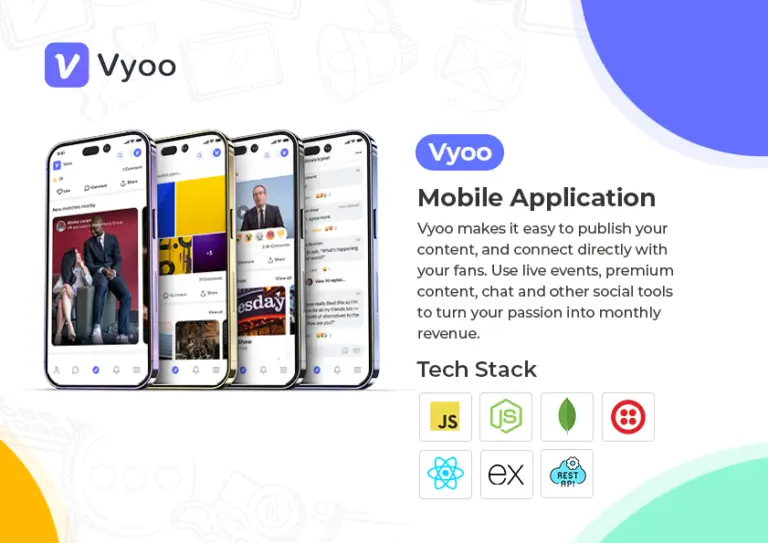
Vyoo Subscription Platform Case Study highlights how a creator-focused social media platform enables influencers and organizations to build subscription communities, monetize premium content and engage audiences through live interaction tools.

Vyoo Subscription Platform Case Study highlights how a creator-focused social media platform enables influencers and organizations to build subscription communities, monetize premium content and engage audiences through live interaction tools.
Techticks delivers digital innovative solutions, including web and mobile apps, Ai integrations, and scalable systems. We help businesses grow, improve performance, and solve real-world challenges with secure, future-ready technology.
Our work is recognized by Clutch and Upwork for delivering secure, scalable, and high-quality software to businesses worldwide.