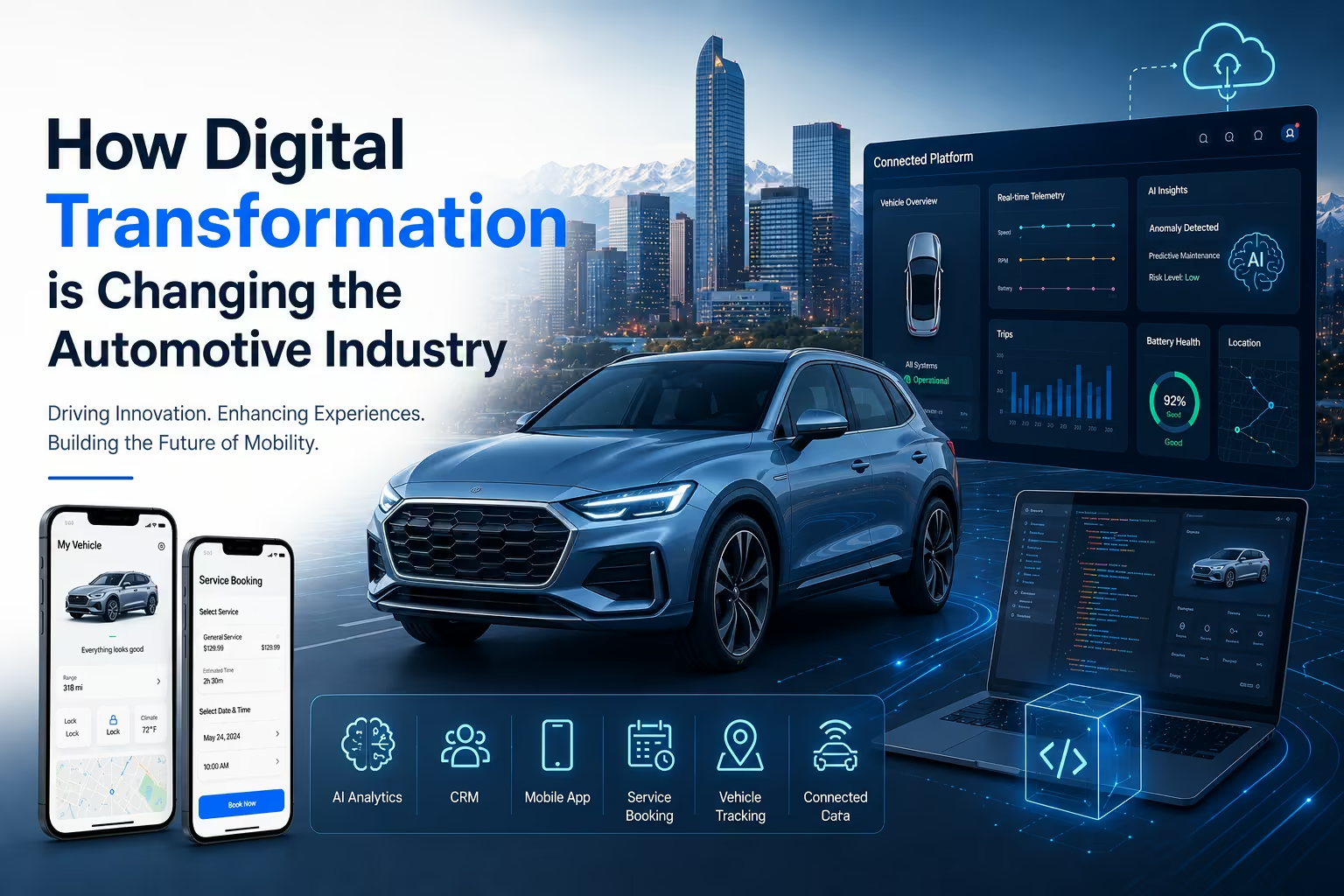
Automotive Digital Transformation: The automotive industry is no longer only about manufacturing, selling and servicing vehicles. It is becoming a connected digital ecosystem where data, automation, artificial intelligence, web platforms, mobile apps and cloud infrastructure shape how businesses operate and how customers interact with mobility services.
For dealerships, service centers, fleet operators, rental companies, auto marketplaces and mobility startups, automotive digital transformation is now a serious business priority. Customers expect faster booking, transparent pricing, real-time updates, personalized communication, online inventory browsing, financing support and smooth mobile experiences. At the same time, automotive businesses need better control over sales pipelines, service workflows, vehicle data, inventory, fleet movement, maintenance and customer relationships.
This is where modern automotive software solutions become essential. From car dealership management software to vehicle tracking mobile apps, automotive CRM software, fleet management software solutions and connected car applications, digital systems are helping automotive companies reduce manual work, improve decision-making and create better customer experiences.
For businesses in the USA, especially growing companies in Denver, CO, digital transformation is not just a technology upgrade. It is a way to compete smarter, scale faster and build stronger customer trust.
What Automotive Digital Transformation Really Means
Automotive digital transformation means using software, data, automation, cloud systems, AI and mobile-first platforms to improve how automotive businesses work. It connects operations that were once separated across paper forms, phone calls, spreadsheets, disconnected tools and manual follow-ups.
In a traditional dealership or automotive service business, a customer may call for availability, visit the location, ask for pricing, wait for service updates and receive follow-ups manually. In a digitally transformed automotive business, that same journey can happen through an integrated web or mobile platform.
A customer can browse vehicles online, request a quote, book a service appointment, upload documents, receive automated reminders, track service status, communicate with the dealership and complete parts of the buying or servicing journey digitally. Behind the scenes, staff can manage leads, assign tasks, update inventory, check service schedules, track vehicles and review performance reports from one connected dashboard.
This is why automotive web applications and mobile apps are becoming the backbone of modern automotive operations.
Why AI in Automobile Industry is Accelerating Change
AI in automobile industry operations is moving beyond experimental use cases. Automotive companies are using AI to automate repetitive work, analyze customer behavior, predict service needs, improve fleet performance, personalize sales communication and support smarter decision-making.
- For dealerships, AI can help score leads, recommend follow-up timing, identify customers likely to buy and support sales teams with better insights.
- For service centers, AI can help predict maintenance patterns, organize appointment loads and improve technician scheduling.
- For fleet operators, AI can analyze driver behavior, fuel usage, route efficiency, downtime and vehicle health.
This is also where ai in smart vehicles becomes important. Smart vehicles generate data from sensors, telematics systems, infotainment platforms and connected devices. When this data is integrated into cloud systems and business applications, automotive businesses can create smarter services, better maintenance programs and more personalized customer experiences.
For Techticks, this aligns strongly with its AI Development & Integration service, where AI can be embedded into existing platforms, customer portals, mobile apps, analytics dashboards and workflow automation systems.
Car Dealership Management Software is Becoming a Core Business System
One of the biggest areas of automotive digital transformation is car dealership management software. Dealerships manage many moving parts: inventory, leads, test drives, documents, service requests, customer communication, financing, trade-ins, sales performance and after-sales support.
Without a centralized system, staff members may depend on spreadsheets, messaging apps, paper records and multiple disconnected platforms. This creates delays, lost leads, duplicate work and poor customer visibility.
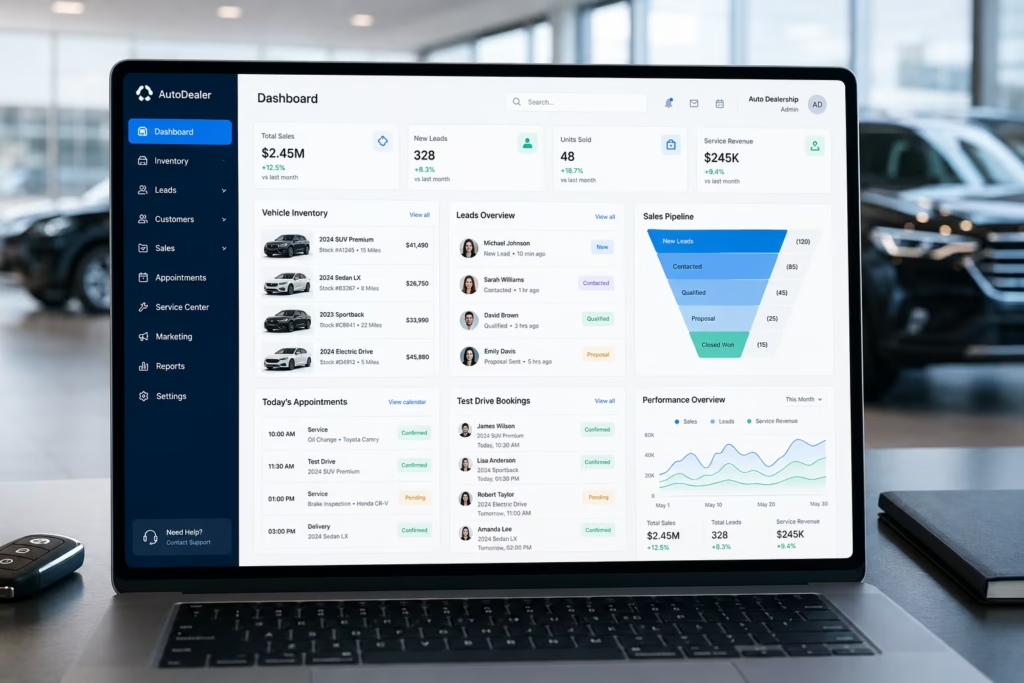
Modern dealership software can bring everything into one place:
| Feature | Traditional Process | Digital Transformation Advantage |
| Lead Management | Manual calls and spreadsheets | Centralized CRM with automated follow-ups |
| Inventory | Updated manually | Real-time vehicle listings and availability |
| Service Booking | Phone-based scheduling | Online and mobile car service booking apps |
| Customer Records | Scattered information | Unified automotive CRM software |
| Reporting | Manual monthly reports | Live dashboards and performance analytics |
| Vehicle Tracking | Limited visibility | GPS-based vehicle tracking mobile apps |
| Communication | Staff-dependent | Automated SMS, email and app notifications |
This kind of software does more than digitize records. It helps dealerships operate with more control, speed and consistency.
Automotive CRM Software Improves Sales and Customer Retention
Customer relationships are one of the most valuable assets in the automotive business. A dealership may lose revenue not because it lacks inventory, but because leads are not followed up on time, customer preferences are not recorded and after-sales communication is weak.
Automotive CRM software solves this by organizing customer data, sales opportunities, communication history, purchase interests, service records and follow-up schedules. Sales teams can see where every lead stands in the pipeline. Managers can track staff performance. Service teams can identify repeat customers and recommend maintenance at the right time.
For example, if a customer browses SUVs on a digital car marketplace platform, requests financing information and later books a test drive, the CRM can connect all of those actions into one profile. This gives the dealership a clearer view of intent and allows personalized communication.
For USA-based dealerships and automotive businesses in Denver, CO, this can be a competitive advantage because customers expect speed, relevance and convenience.
Vehicle Tracking Mobile Apps and Fleet Management Software Solutions
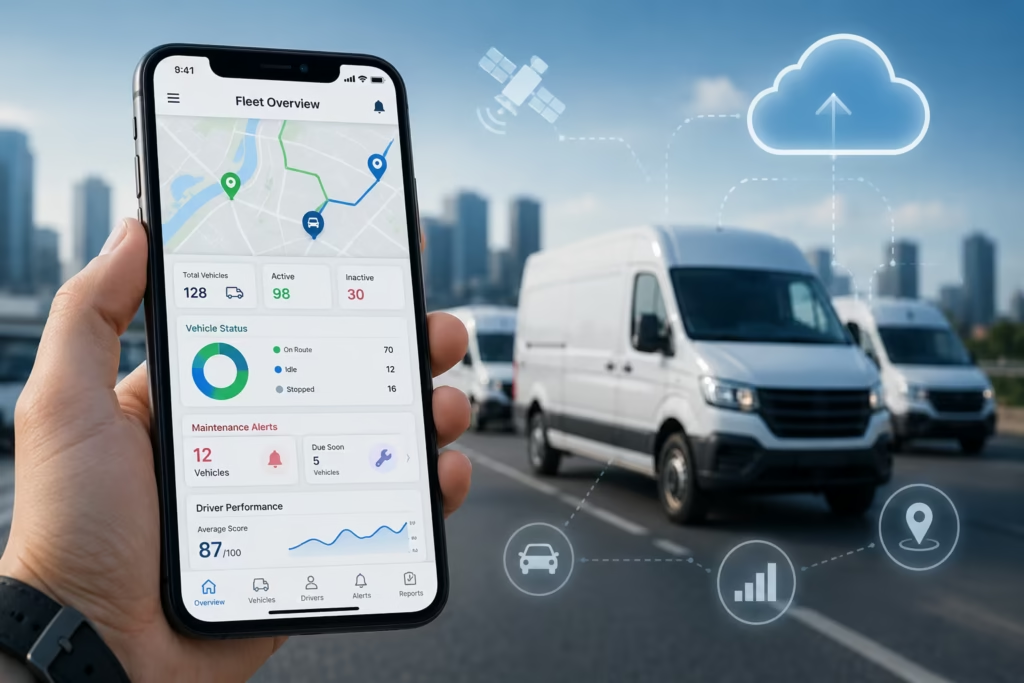
Fleet-based businesses need real-time visibility. Whether a company manages rental cars, delivery vehicles, service vans, dealership test-drive vehicles, or commercial fleets, knowing where vehicles are and how they are being used is essential.
Vehicle tracking mobile apps and fleet management software solutions help businesses monitor vehicle locations, route history, driver behavior, fuel usage, maintenance schedules, mileage and operational performance. Managers can receive alerts when a vehicle needs service, leaves a defined location, or shows unusual usage patterns.
This is especially valuable for automotive businesses that operate across multiple cities or service areas. A mobile-first system allows managers, drivers and field staff to access information without being tied to a desktop office.
Fleet management software can also integrate with CRM systems, service booking tools, accounting platforms and analytics dashboards. That connected workflow reduces manual reporting and helps businesses make faster decisions.
Connected Car Applications and Smart Car Technology Systems
The rise of connected car applications and smart car technology systems is changing how vehicles interact with users, businesses and service providers. Cars are increasingly connected to mobile apps, cloud platforms, infotainment systems, diagnostics tools and real-time data networks.
For automotive companies, this creates new opportunities. A service center can use connected data to notify customers about maintenance. A fleet operator can use vehicle diagnostics to reduce breakdowns. A dealership can offer app-based ownership experiences after a sale. A mobility startup can build a subscription platform around connected vehicle data.
Cloud providers such as AWS for Automotive are already supporting automotive digital transformation through cloud, data, AI, software-defined vehicle and connected mobility solutions.
The important point for businesses is this: connected car technology is not only for large manufacturers. Dealerships, fleet companies, rental businesses and auto service providers can also use connected systems through custom web and mobile applications.
Automotive Industry Automation Reduces Manual Work
Automotive industry automation is not about replacing people. It is about reducing repetitive tasks so teams can focus on higher-value work.
Automation can support:
- Lead capture from websites and marketplaces
- Appointment reminders for service bookings
- Inventory updates across web platforms
- Customer follow-up sequences
- Maintenance alerts
- Document collection
- Internal task assignment
- Fleet status notifications
- Review requests after service completion
- Sales and service performance reporting
For example, car service booking apps can automatically confirm appointments, assign time slots, send reminders and update staff dashboards. This reduces phone dependency and improves the customer experience.
Similarly, dealership workflows can automate lead assignment, test drive scheduling, pricing requests and customer follow-ups. The result is a faster and more organized business operation.
Digital Car Marketplace Platforms Are Reshaping Buying Behavior
The vehicle buying process has changed. Customers now research online before visiting a dealership. They compare prices, check features, read reviews, request financing information and expect digital communication before making a decision.
This is why digital car marketplace platforms are becoming important for automotive businesses. A strong marketplace platform can include vehicle listings, advanced filters, comparison tools, financing requests, dealer profiles, chat features, booking options and customer dashboards.
For dealerships and automotive startups, a marketplace platform creates a stronger digital presence and gives customers more control over the buying journey. Instead of relying only on physical walk-ins, businesses can attract leads through search engines, paid campaigns, social media and organic content.
This connects directly with Techticks’ Web App Development service, where custom platforms can be built around business workflows instead of forcing companies into generic templates.
For more background on why custom platforms matter, read Techticks’ previous article: Custom Web Application Development: Building the Engine of Your Modern Business.
Automobile Industry Software Development: Custom vs Off-the-Shelf
Automotive businesses usually face two options: buy ready-made software or build a custom system. Both have value, but the right choice depends on business needs.
| Option | Best For | Limitations | Long-Term Value |
| Off-the-shelf automotive software | Small teams needing quick setup | Limited customization, recurring fees, workflow restrictions | Good for basic needs |
| Custom automotive software development | Growing dealerships, fleets, marketplaces and service companies | Requires planning and development investment | Stronger scalability and ownership |
| Hybrid integrations | Businesses using existing tools | Integration complexity | Good if systems are well connected |
Custom automobile industry software development is especially useful when a business has unique workflows, multiple departments, custom reporting needs, mobile requirements, or plans to scale.
A Denver dealership, for example, may need a platform that combines inventory, CRM, service booking, financing requests, customer portal, SMS notifications and analytics. A generic tool may handle some of these functions, but a custom platform can connect them around the business model.
Why Web and Mobile Apps Matter in Automotive Digital Transformation
Modern automotive users expect mobile convenience. They want to book services, check vehicle availability, receive updates and communicate without friction. Staff also need mobile access to dashboards, customer records, inventory and fleet status.
This makes mobile app development essential. A customer-facing app can support service booking, loyalty programs, vehicle browsing, appointment status, push notifications and document uploads. An internal mobile app can support sales teams, drivers, technicians and managers.
Techticks’ Mobile App Development service fits naturally into this transformation because automotive businesses need apps that are secure, scalable, user-friendly and integrated with backend systems.
The strongest results happen when web and mobile apps work together. The web platform manages operations, dashboards, reports and admin workflows. The mobile app supports customers and field teams. Together, they create a connected automotive ecosystem.
How Techticks Helps Automotive Businesses in Denver, CO and Across the USA
Techticks helps businesses build digital products that are practical, scalable and aligned with real operations. For automotive companies, that can include dealership management systems, CRM platforms, car service booking apps, fleet tracking dashboards, digital marketplace platforms, AI-powered analytics and connected mobility applications.
Because Techticks is positioned as a custom software development company in Denver, CO, the article should target both local and national search intent. Local automotive businesses may search for a software partner nearby, while national businesses may search for automotive software development expertise in the USA.
A strong automotive digital transformation strategy should include discovery, user journey mapping, UI/UX design, backend architecture, mobile app development, AI integration, QA testing, cloud deployment and long-term maintenance. This ensures the platform is not only launched but also improved over time.
FAQs (Frequently Asked Questions)
What is automotive digital transformation?
Automotive digital transformation is the use of software, AI, automation, cloud platforms, web applications, mobile apps and data systems to modernize automotive operations, improve customer experience and increase business efficiency.
Why is AI important in the automobile industry?
AI helps automotive businesses analyze data, automate repetitive tasks, predict maintenance needs, improve lead management, personalize customer communication and support smart vehicle and fleet systems.
What is car dealership management software?
Car dealership management software is a digital platform that helps dealerships manage inventory, leads, customers, sales, service appointments, documents, reporting and internal workflows from one connected system.
How do vehicle tracking mobile apps help fleet businesses?
Vehicle tracking mobile apps help fleet businesses monitor vehicle locations, routes, driver activity, maintenance needs, mileage and operational performance in real time.
What are connected car applications?
Connected car applications are digital systems that connect vehicles with mobile apps, cloud platforms, diagnostics tools, infotainment systems and business dashboards to enable smarter mobility services.
Should an automotive business choose custom software or ready-made software?
Ready-made software is useful for basic needs, but custom automotive software is better for businesses with unique workflows, scalability requirements, integrations, mobile app needs, or marketplace-style platforms.
Can Techticks build automotive web and mobile applications?
Yes. Techticks provides web app development, mobile app development, AI development and integration, DevOps, QA testing and custom software services for industries including automobile, logistics, SaaS, healthcare, fintech, education and travel.
Conclusion
Digital transformation is changing the automotive industry by connecting dealerships, fleets, service centers, marketplaces and customers through smarter software systems. Businesses that once depended on manual workflows are now moving toward automated platforms, mobile-first customer experiences, AI-powered insights and connected vehicle data.
For automotive businesses in Denver, CO and across the USA, the opportunity is clear. Investing in automotive digital transformation can improve operations, reduce delays, increase customer satisfaction and create a stronger foundation for future growth.
Whether the goal is car dealership management software, automotive CRM software, vehicle tracking mobile apps, fleet management software solutions, car service booking apps, connected car applications, or a full digital car marketplace platform, the right software partner can help turn the vision into a scalable product.
Techticks helps automotive companies build secure, modern and business-focused digital solutions that support long-term growth in a rapidly changing mobility market.
If you have any questions regarding “Automotive Digital Transformation“, feel free to contact us. For inquiries, call us at: +1 (983) 212-4713.
Disclaimer: The above information is subject to change and represents the views of the author. It is shared for educational purposes only. Readers are advised to use their own judgment and seek specific professional advice before making any decisions. TechTicks is not liable for any actions taken by readers based on the information shared in this article. You may consult with us before using this information for any purpose.